
If I asked you to describe the people God has called you to reach, how would you answer? To be clear, I’m not asking about demographics, census data, average household income, or population growth. I’m asking about the people themselves. What keeps them awake at night? What do they celebrate? What do they fear? Where do they spend their Saturdays? What do they believe will finally make them happy?
Those questions are much harder to answer.
It’s possible to know everything about a city and almost nothing about its people. Statistics have their place. I love maps, demographic reports, and community research. I’ve spent countless hours studying neighborhoods, traffic patterns, school districts, housing developments, and population trends. This is not wasted work. But numbers don’t tell you what people worship.
That’s one of the reasons I love Paul’s approach in Acts 17. When he arrived in Athens, he didn’t immediately stand in the marketplace and begin preaching. He walked the city. He observed. He paid attention. Luke tells us that Paul noticed the city’s many idols. Later, standing in the Areopagus, he said, “I perceive that in every way you are very religious… For as I passed along and observed the objects of your worship” (Acts 17:22–23).
The word observed is easy to skip over, but it says a great deal about Paul’s approach to ministry. He slowed down long enough to understand the people before speaking to them. He looked. He listened. He learned. Only then did he proclaim Christ.
I know. It can be harder than it sounds. Especially when nearly half of church planters are introverts.
Most of us are wired for activity. We want to launch something, fix something, organize something, or preach something. We naturally assume movement equals progress. But Paul reminds us that faithful mission often begins with careful observation. Before we speak into a community, we should understand it. Not because the gospel changes. It never does. But because people do.
It’s possible to know everything about a city and almost nothing about its people.
Every community has its own rhythms, assumptions, fears, and aspirations. Every city has its own story. The idols may not be carved from stone anymore, but they are just as real. They often look like success, security, comfort, politics, family, achievement, or personal freedom. Whatever promises life apart from Christ eventually becomes an altar.
Paul recognized the Athenians’ altar “to the unknown god” because he had first learned how they thought. That observation became a bridge for the gospel and he didn’t connected it to the questions they were already asking.
I’ve become convinced that observation is one of the most overlooked skills in church planting. The leaders who make the greatest long-term impact aren’t always the loudest communicators or the most innovative strategists. They’re often the best students. They study people before they expect people to listen.
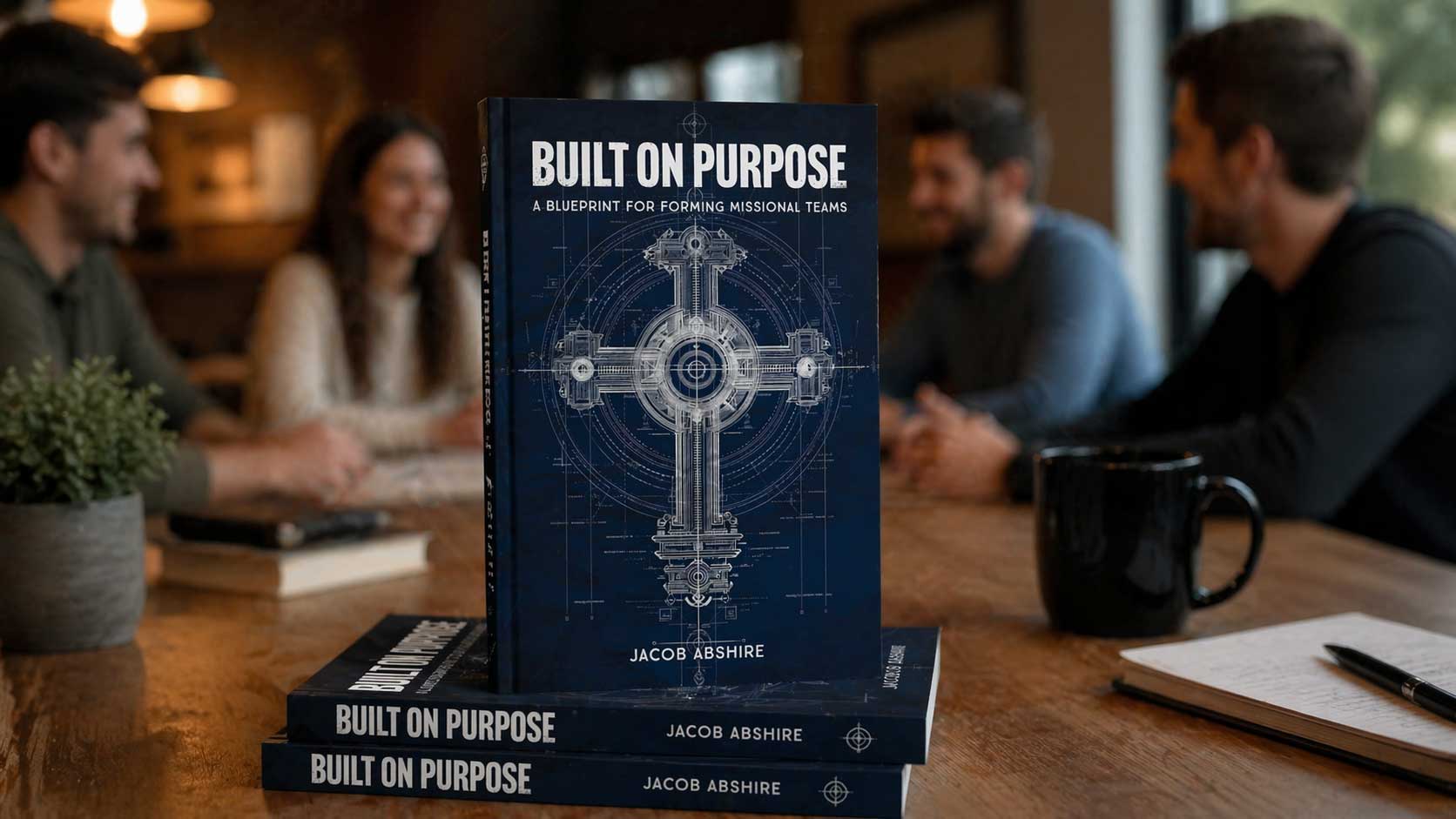
That’s actually one of the reasons I included a community mapping exercise in Built on Purpose. Before I ask church planting teams to think about strategy, I ask them to walk their neighborhoods. Visit the coffee shops. Sit in the parks. Notice where people gather. Learn the rhythms of the community. Ask questions. Observe. The goal is to cultivate affection. It’s difficult to love a community you’ve never taken the time to know.
Jesus knew people. Paul knew people. If we want to serve our communities faithfully, we must do the same. Every neighborhood has a story, every city has its own terrain, and every person carries questions only the gospel can answer.
The more carefully we understand the people around us, the more clearly we’ll know how to connect the unchanging gospel to the lives God has already placed in front of us.
Do you know how God has shaped you and your team for His mission?
Download this workbook to guide your team through twelve exercises that will bring unity, clarity, and vision to your mission work.