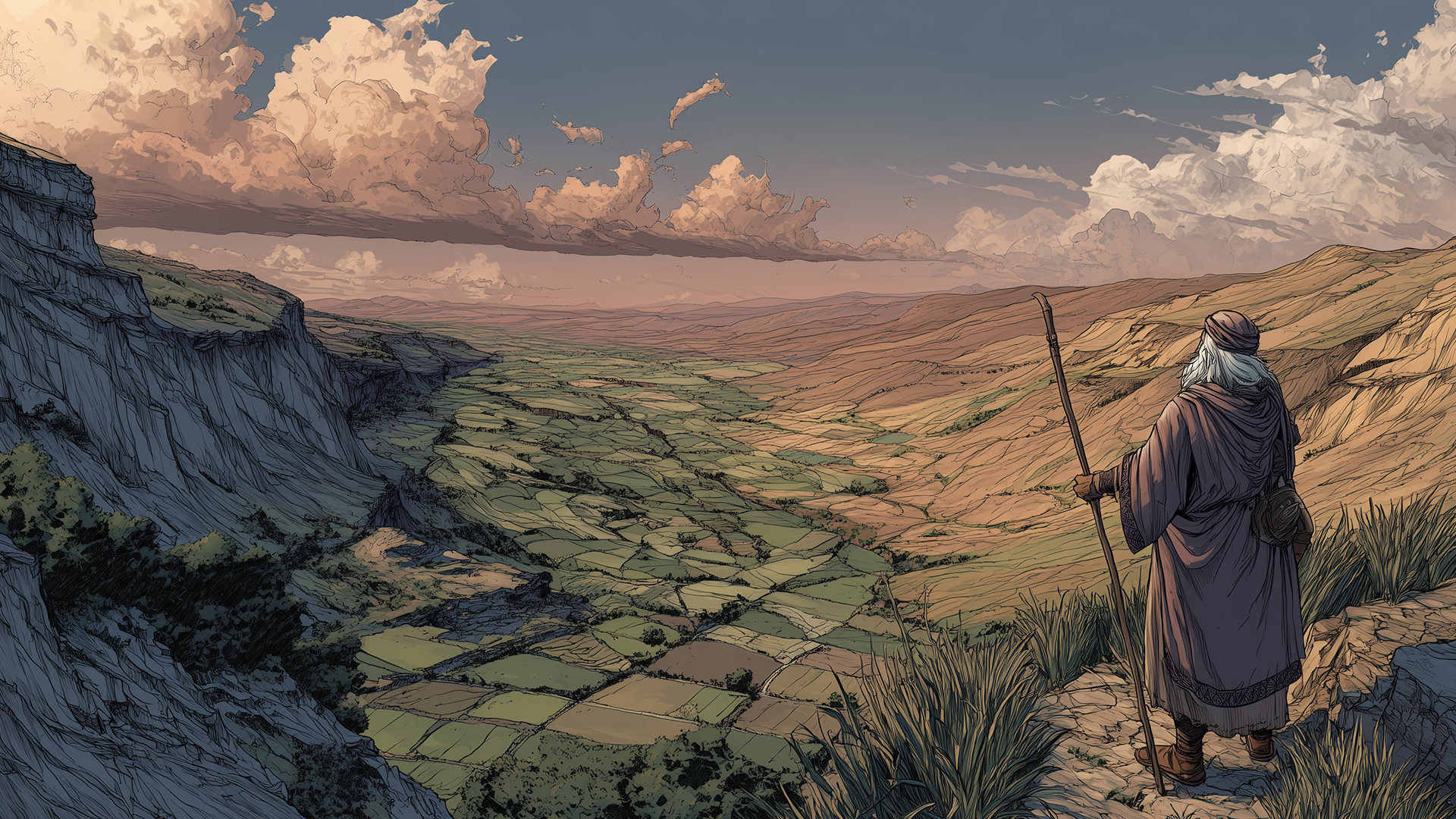
Church planters often tell stories about their calling with remarkable clarity. They describe a moment when the Lord’s direction seemed unmistakable. A particular city was placed on their heart. A passage of Scripture came alive. A series of circumstances aligned. They knew where they were supposed to go and what they were supposed to do. Sometimes their stories sound like God spoke from a burning bush.
That has not been my experience.
I have never heard the Lord audibly tell me to plant a church. I cannot point to one dramatic moment when God gave me a detailed plan for my ministry. Most of the time, I have simply studied His Word, considered what He desires, and tried to act faithfully.
When Scripture gives a clear command, I obey it. When Scripture gives a principle, I try to apply it wisely. When several faithful options remain, I make the decision that seems to make the most sense and begin working. Sometimes a door opens. Sometimes it closes. Sometimes we move forward. Sometimes we pivot.
Only afterward can I look back and recognize the Lord’s fingerprints on the process. Hindsight often gives me the confidence to say, “Yes, this is what the Lord wanted me to do.” The difficulty is that hindsight is unavailable when you are beginning the work.
Before the doors open, before the resources arrive, and before the fruit appears, you are left asking: Is this really what the Lord wants me to do? Has God given me enough reason to move forward?
Caleb helps me with those questions.
A Different Spirit
Caleb first appears among the twelve spies Moses sent into Canaan. Each man was chosen to examine the land God had promised to Israel and report what he found (Num. 13:1–20). The land was fruitful. It truly flowed with milk and honey. It was also occupied by strong people living in fortified cities (Num. 13:27–29).
Ten spies saw the obstacles and surrendered to fear. Caleb saw the same obstacles and said, “Let us go up at once and occupy it, for we are well able to overcome it” (Num. 13:30). The others disagreed. They insisted that Israel could not defeat the inhabitants. They specifically mentioned the descendants of Anak, whose size made the Israelites feel like grasshoppers (Num. 13:31–33).
Fear spread through the camp. The people wept, complained, and talked about returning to Egypt (Num. 14:1–4). Joshua and Caleb tore their clothes. They pleaded with Israel to trust the Lord:
“The land, which we passed through to spy it out, is an exceedingly good land. If the LORD delights in us, he will bring us into this land and give it to us.”
Numbers 14:7–8
Their confidence was rooted in the Lord. The cities were fortified. The people were strong. The descendants of Anak were intimidating. Yet none of them were stronger than the God who had promised Israel the land.
Israel refused to believe. Because of their rebellion, that generation would die in the wilderness. Joshua and Caleb alone would enter the land (Num. 14:26–30).
The Lord then said something remarkable about Caleb:
“But my servant Caleb, because he has a different spirit and has followed me fully, I will bring into the land into which he went, and his descendants shall possess it.”
Numbers 14:24
Caleb believed God when nearly everyone around him was afraid.
Then he waited.
Forty-Five Years of Faithfulness
Caleb was forty years old when Moses sent him into Canaan (Josh. 14:7). By the time Israel began receiving its inheritance, he was eighty-five (Josh. 14:10).
Forty-five years had passed.
During that time, Caleb watched an unbelieving generation die in the wilderness. He crossed the Jordan under Joshua’s leadership. He fought alongside Israel through years of conquest. He waited while Joshua led the people and distributed the land.
Faithfulness is sometimes demonstrated by taking the lead. At other times, faithfulness means serving well while someone else leads. Caleb did both.
The Lord appointed Joshua to succeed Moses (Josh. 1:1–9). Caleb could have resented that decision. He had also believed God when the other spies rebelled. He had also followed the Lord fully. He had also received a promise.
Yet Scripture records no rivalry between Caleb and Joshua. Caleb did not demand recognition. He did not divide the people. He did not use his faithfulness as leverage to seize leadership. He waited, served, fought, and followed.
Faithfulness is sometimes demonstrated by taking the lead. At other times, faithfulness means serving well while someone else leads. Caleb did both.
Give Me This Hill Country
When the time came to divide the land, Caleb approached Joshua and reminded him of what the Lord had said through Moses (Josh. 14:6–9). He had not forgotten the promise.
The passing years had not weakened his faith. At eighty-five, he said, “I am still as strong today as I was in the day that Moses sent me; my strength now is as my strength was then, for war and for going and coming” (Josh. 14:11).
Then Caleb made his request, “So now give me this hill country of which the LORD spoke on that day” (Josh. 14:12). Mind you, this was not a quiet retirement property. The Anakim were still there. The cities were large and fortified (Josh. 14:12). Caleb was asking for the very territory associated with the people who had terrified Israel forty-five years earlier.
Then he said something that has stayed with me, “It may be that the LORD will be with me, and I shall drive them out just as the LORD said” (Josh. 14:12).
Caleb possessed a promise, but he did not speak presumptuously about the battle. He knew the land had been promised to him. He knew God wanted the land possessed. He knew the Anakim did not belong there. He knew the Lord had remained faithful for forty-five years.
Yet Caleb did not pretend to know every detail of what God would do next.
“It may be that the LORD will be with me.”
Hear his words for what they are—not unbelief, but humble faith. Caleb trusted what God had revealed without claiming knowledge God had not given him. He had enough confidence to act and enough humility to leave the outcome with the Lord.
Joshua blessed him and gave him Hebron as his inheritance (Josh. 14:13). Caleb went into the land and drove out Sheshai, Ahiman, and Talmai, the descendants of Anak (Josh. 15:13–14). The very people who once made Israel feel like grasshoppers were driven out by the man who had believed God from the beginning.
In the end, hindsight revealed the Lord’s faithfulness. But Caleb had to climb the hill before he could look back from the top.
Faith Before Clarity
Church planters frequently want certainty before taking action. We want the Lord to show us that the building will become available, the money will be raised, the team will remain faithful, and the church will become established. We want to see the Lord’s fingerprints before we begin the work.
Usually, fingerprints are found afterward.
Caleb’s personal promise was unique. We should not claim his inheritance as though God has promised every church planter a particular building, piece of land, attendance number, or ministry outcome. We can follow his example.
In the end, hindsight revealed the Lord’s faithfulness. But Caleb had to climb the hill before he could look back from the top.
We know God desires His gospel to be proclaimed (Matt. 28:18–20). We know He desires churches to be established and strengthened (Acts 14:21–23). We know He desires shepherds to care for His people faithfully (1 Pet. 5:1–4). We know He desires believers to make disciples, practice hospitality, bear one another’s burdens, and seek the good of others. That knowledge gives us plenty of reason to act.
We may still have questions about location, timing, finances, methods, and results. Wisdom is required. Counsel matters. Circumstances should be considered. Closed doors may require us to change direction.
Faithfulness does not require us to know the outcome. It requires us to obey what God has revealed and trust Him with what He has withheld.
Perhaps the Lord will provide the property. Perhaps He will redirect us somewhere better. Perhaps this strategy will bear fruit. Perhaps He will use its failure to lead us toward another one. Perhaps the team will grow. Perhaps the Lord will refine it.
We do not always know what the Lord will do through a particular decision. We know what kind of people He has called us to be while we make it.
Caleb followed the Lord fully when he was forty (Num. 14:24). He continued following when he was eighty-five (Josh. 14:10–12). He believed before the wilderness, remained faithful through the waiting, served under another leader, and acted when the opportunity finally came.
That is the encouragement I need while we plant.
I do not need to manufacture a dramatic calling story. I do not need to pretend that God has told me things He has not told me. I do not need complete certainty about every step before taking the next faithful one. I can study His Word, seek wisdom, make the best decision I can, and begin the work in faith.
One day, I may look back and see exactly what the Lord was doing.
Today, hindsight is out of reach.